

The HighStreet Holidays Journal
Travel, Deeply Considered
Expert guides, destination deep-dives, First Class cabin reviews and insider knowledge from the specialists who have actually been there.
Explore by Destination
Filtered Articles: Maldives
 Specialist Deep Dive
Every Maldives Atoll Ranked: The Definitive Guide for Luxury Travellers
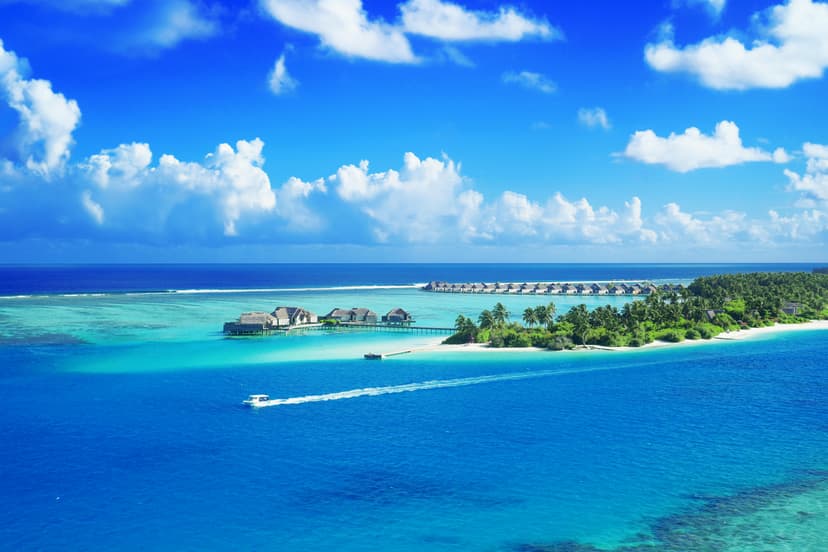
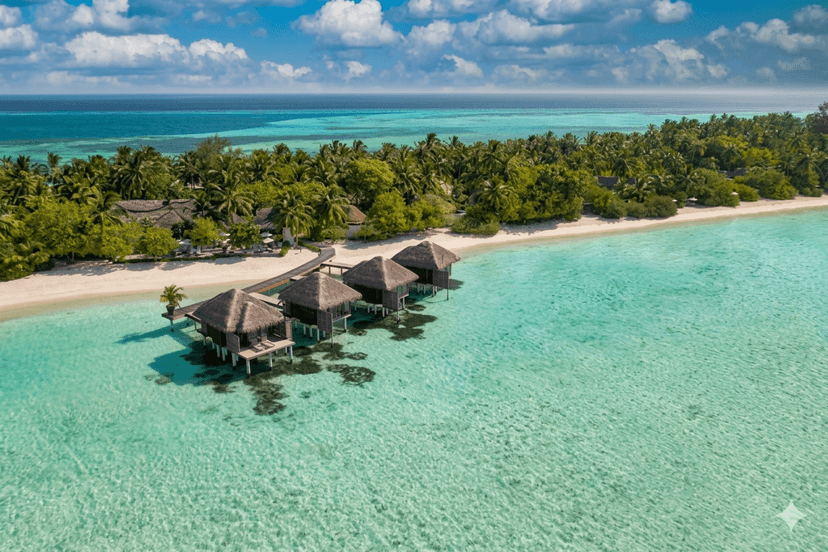
The Maldives has 26 natural atolls and over 1,200 islands. More than 160 of those islands have resorts on them. Choosing between them without understanding the geography is like choosing a London neighbourhood without a map — you might get lucky, but you are more likely to end up somewhere that does not suit you. This guide ranks the atolls that matter for luxury travellers. Not all 26 — many have no tourism infrastructure. It covers the eight atolls where the resorts are, what each one offers, and who each one is for. How the Maldives Is Organised The Maldives stretches 870 kilometres north to south. The atolls are broadly grouped into northern, central and southern. Male — the capital — sits in the centre. Resorts in the northern atolls require a seaplane transfer (30–60 minutes from Male). Central atoll resorts are accessible by speedboat (15–60 minutes). Southern atolls may require a domestic flight plus a boat transfer. The transfer method, time and cost should factor into your decision far more than most travellers realise. North Malé Atoll — The Classic The most accessible atoll. Speedboat transfers from the airport take 15–45 minutes. Home to One&Only Reethi Rah, Cheval Blanc, Patina and Velana Private Island. The reef quality is good but not the best in the Maldives. The convenience is unmatched — you can be at your resort within an hour of landing. Best for: Short stays (4–5 nights). Late-arriving flights. Travellers who want minimal transfer time. Couples who value world-class resort facilities over marine life. Our ranking: 4th overall. Excellent resorts, average reefs, maximum convenience. South Malé Atoll — The Diver’s Choice Just south of the capital with speedboat access. Home to COMO Cocoa Island and Naladhu Private Island. The channels between North and South Malé atolls create strong currents that bring pelagic marine life — reef sharks, mantas and occasionally whale sharks. Diving is noticeably better than North Malé. Best for: Divers who want quick access. Couples seeking a boutique, intimate resort. Repeat visitors who want a different Maldives experience from the northern atolls. Our ranking: 5th overall. Fewer resort options but excellent diving and a more intimate scale. Baa Atoll — The Specialist’s Favourite A UNESCO Biosphere Reserve and, according to our specialists, the finest atoll in the Maldives. Home to Soneva Fushi, Amilla and Finolhu. The house reefs are exceptional. Hanifaru Bay — the manta ray feeding aggregation site — is the single most extraordinary marine wildlife spectacle in the archipelago. The seaplane transfer is approximately 30 minutes. Best for: Marine life enthusiasts. Anyone who wants the best house reef. Families. Honeymooners who value nature over nightlife. Repeat visitors who want depth. Our ranking: 1st overall. The combination of Soneva Fushi, the UNESCO reef system and Hanifaru Bay makes this the most complete atoll in the Maldives. “If our specialists could only send a client to one atoll in the Maldives, it would be Baa. Every time. The reef alone justifies the choice.” — Almas, Indian Ocean Specialist South Ari Atoll — The Whale Shark Capital The best year-round destination for whale shark sightings in the Maldives. Home to Conrad Maldives Rangali Island (famous for the Ithaa underwater restaurant), LUX* South Ari Atoll and Lily Beach. The atoll has a resident population of whale sharks — they do not migrate, so encounters are possible in every month of the year. Best for: Whale shark encounters (year-round). Divers. Snorkellers. Families wanting marine education. Travellers who want a specific marine life encounter guaranteed. Our ranking: 2nd overall. The whale sharks alone make this atoll unique. The reefs are excellent. Conrad Rangali is a genuine icon. Raa Atoll — The Quiet One North of Baa, less developed, genuinely remote. Home to Joali and The Ritz-Carlton Fari Islands (technically Fari Atoll, near Raa). Fewer resorts means fewer divers on the reef and a stronger sense of seclusion. The seaplane transfer is 40–50 minutes. Best for: Seclusion. Honeymoons where privacy is the priority. Travellers who want the newest properties. Those who find the more popular atolls too busy. Our ranking: 3rd overall. Genuinely quiet, excellent new properties, and a reef system that is less visited. Noonu Atoll — The Ultra-Luxury Atoll Home to Velaa Private Island, Cheval Blanc Randheli and Soneva Jani. This is the highest concentration of ultra-luxury properties in the Maldives. Velaa has a private golf course and a spa that rivals any in Asia. Soneva Jani has the water slide villas that went viral. The atoll itself is remote — 45-minute seaplane — and the properties are spread far apart. Best for: Ultra-luxury travellers. Privacy. Couples who want the newest, most exclusive properties. Design-led travellers. Our ranking: Joint 3rd overall. The properties are extraordinary. The reefs are less distinctive than Baa or South Ari. Lhaviyani & Dhaalu — The Emerging Atolls Lhaviyani is home to Hurawalhi and Kudadoo — the only all-inclusive luxury resort in the Maldives. Dhaalu has Niyama Private Islands and St. Regis. Both atolls are quieter, less established, and offer strong value compared to the more developed atolls. Reef quality is improving as marine protection measures take effect. Best for: Value-conscious luxury travellers. All-inclusive preferences (Kudadoo). Travellers who want newer properties at lower prices than Noonu or Baa. Our ranking: 6th overall. Excellent value. Improving reefs. Fewer marquee properties. The Southern Atolls — Laamu, Addu & Gaafu The southern atolls require a domestic flight from Malé (approximately 1 hour) plus a boat transfer. They are the least visited atolls in the Maldives. Laamu has Six Senses Laamu — one of the finest eco-luxury resorts in the world. Addu (the southernmost atoll) has a genuine local culture that the northern tourist atolls lack. Gaafu has Raffles Maldives. Best for: Repeat visitors. Travellers seeking genuine remoteness. Eco-conscious luxury. Diving in unexplored waters. Off-season travel (southern atolls receive less rain during the southwest monsoon than northern atolls). Our ranking: 7th overall for first-time visitors. Significantly higher for repeat visitors who want something genuinely different. The Final Ranking [Block Field] This ranking reflects our specialists’ collective experience across hundreds of Maldives bookings. Your ideal atoll depends on what you value most — reef quality, seclusion, convenience, budget or a specific marine encounter. A 20-minute call with our Indian Ocean specialists will narrow it to the right choice.
 When to Visit
Best Time to Visit the Maldives — A Month-by-Month Guide
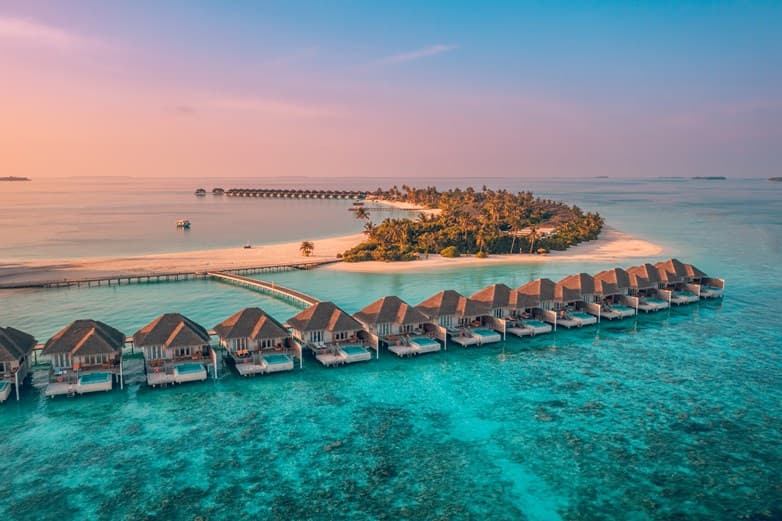
The honest answer to “when should I go to the Maldives?” is: it depends entirely on what you want from your trip. November to April is the dry season and the easy recommendation. But “dry season” is a broad brush that obscures the real differences between months — differences in price, in crowds, in marine life, and in which atoll will give you the best experience. Our Indian Ocean specialists have visited the Maldives in every month of the year across 15 years of arranging holidays there. Here is what they tell their clients. The Two Seasons — Dry vs Wet The Maldives has two monsoon seasons. The northeast monsoon (iruvai) runs from November to April and brings dry weather, calm seas and excellent visibility. The southwest monsoon (hulhangu) runs from May to October and brings more rain, stronger winds and rougher seas — but also lower prices, fewer tourists and some of the best marine life encounters of the year. Temperatures barely change. The Maldives sits close to the equator, and air temperatures hover between 28°C and 31°C year-round. Water temperature ranges from 27°C to 30°C. You will never be cold in the Maldives, regardless of when you visit. The real variable is rainfall — and even in the wet season, rain in the Maldives typically arrives in short, intense bursts rather than all-day downpours. A “rainy day” in the Maldives often means an hour of dramatic tropical rain followed by blue skies and sunshine. “Our specialists have been to the Maldives in August and had seven days of unbroken sunshine. They have been in February and had two days of rain. The seasons are averages, not guarantees.” — Almas, Travel Specialist January & February — Peak Season This is the most popular time to visit. The weather is at its driest and most reliable. Skies are consistently blue, seas are calm, and underwater visibility is at its best — typically 30 metres or more. If you are visiting for the first time and want a guaranteed-good-weather experience, January and February are the safest choices. The trade-off is price and availability. January and February are peak season across every resort in the Maldives. Prices are at their highest, and the most popular villas — particularly overwater suites at Soneva Fushi, One&Only Reethi Rah and Four Seasons Landaa Giraavaru — book out months in advance. If you want to travel in these months, our specialists typically recommend booking 6–9 months ahead. Best for: First-time visitors, honeymooners who want certainty, anyone who prioritises guaranteed sunshine over everything else. Diving & snorkelling: Excellent visibility on the east side of atolls. Manta rays can be spotted at cleaning stations in the central atolls. Whale shark sightings are less frequent than in the wet season. March & April — The Sweet Spot March and April are, according to our specialists, the best overall months to visit the Maldives — and the months most often recommended to clients who are flexible on dates. The weather is still reliably dry, though clouds begin to build towards the end of April. Visibility remains excellent. The crucial difference is price: March rates are typically 15–20% lower than January peak, and April can be 25–30% lower. Availability is also significantly better — you can book 3–4 months ahead rather than 9. The water is at its warmest in March and April, which makes for the most comfortable snorkelling of the year. The seas remain calm. The resorts are noticeably quieter than in January. Best for: Experienced travellers who want peak-season weather without peak-season crowds or prices. Couples. Divers. Anyone who values seclusion. Our recommendation: If your dates are flexible and you want the single best value-to-weather ratio in the Maldives, book the second or third week of March. May to July — The Wet Season Begins May marks the transition into the southwest monsoon. Rain increases, winds pick up, and the western sides of atolls begin to receive more weather. Visibility drops on some reefs. This is when many travellers assume the Maldives is “closed” or not worth visiting. They are wrong. May to July is when the Maldives becomes genuinely interesting for marine life. The change in current brings plankton-rich water from the deep ocean, which in turn attracts manta rays and whale sharks in significant numbers. If you want to dive or snorkel with mantas, May to July on the western side of the atolls is where to be. Prices drop substantially — often 40–50% below January rates. A Water Retreat at Soneva Fushi that costs £4,200 per night in February might be available for £2,400 in June. The quality of the resort, the food, the service — all identical. The only difference is occasional rain and slightly choppier seas. Best for: Budget-conscious luxury travellers, divers, marine life enthusiasts, families (school half-terms in May), repeat visitors who want a different side of the Maldives. August to October — Surf, Savings & Mantas August through October is the deepest wet season. Rainfall is at its peak in September, and some days will be overcast. Seaplane transfers can occasionally be delayed by weather. This is the lowest season in the Maldives, and prices reflect it. But this is also when Hanifaru Bay — in the Baa Atoll, accessible from Soneva Fushi and other northern resorts — comes alive with the world’s most spectacular manta ray feeding aggregation. Hundreds of manta rays gather in a single bay to feed on concentrated plankton. It is one of the most extraordinary marine wildlife events on earth, and it happens between June and November, peaking in August and September. Surfers also know this period well. The southwest monsoon creates consistent swells on the outer reefs, and several resorts in the Male and North atolls offer access to world-class surf breaks that are flat for the rest of the year. Best for: Surfers, manta ray enthusiasts, repeat visitors, anyone who wants genuine value. Avoid if you need guaranteed sunshine every day. Pricing: September is typically the cheapest month. Expect savings of 40–50% versus peak season at most resorts. November & December — Transition & Christmas November is a transition month. The wet season is ending but has not fully cleared. You may get some rain, but the days are increasingly sunny. It is an underrated month — prices are still low, mantas are still present in the northern atolls, and the resorts are beginning to prepare for the high season rush. December is a different matter. The first two weeks of December offer excellent weather at prices that are still below peak — this is one of the best times to visit for value. From around December 20th, Christmas and New Year rates apply, and they are the highest of the entire year. Most resorts enforce minimum stays (typically 7–10 nights) over the festive period, and many require a gala dinner supplement for Christmas Eve and New Year’s Eve. Best for: November — budget-conscious travellers who want improving weather. Early December — excellent value. Late December — families and couples celebrating Christmas, if budget is not a constraint. Which Atoll, Which Month? This is the question that most “best time to visit” guides miss entirely, and it is arguably the most important one. The Maldives stretches across 900 kilometres of ocean. Weather conditions in the northern atolls (Baa, Raa, Noonu) can be quite different to conditions in the southern atolls (Addu, Laamu, Gaafu). During the wet season, the southern atolls tend to receive less rainfall than the north. During the dry season, the difference is less pronounced. For marine life: the Baa Atoll (Soneva Fushi, Amilla) is the manta ray hotspot from June to November. The South Ari Atoll (Conrad, LUX*) is the best year-round location for whale sharks. The North Male Atoll (One&Only Reethi Rah, Cheval Blanc) has the most reliable dry-season diving. This is exactly the kind of detail that is impossible to convey in a generic guide — and exactly why speaking with a specialist who knows the atolls personally makes the difference between a good Maldives trip and the right one. The Verdict There is no single “best time” to visit the Maldives. There is a best time for you, and it depends on what matters most. [Block Field] The right month, the right atoll and the right resort are three decisions that together determine whether your Maldives trip is good or genuinely special. A 20-minute conversation with one of our Indian Ocean specialists will answer all three.
 Property Review
Soneva Fushi, Baa Atoll: Why It Remains the Finest Resort in the Maldives
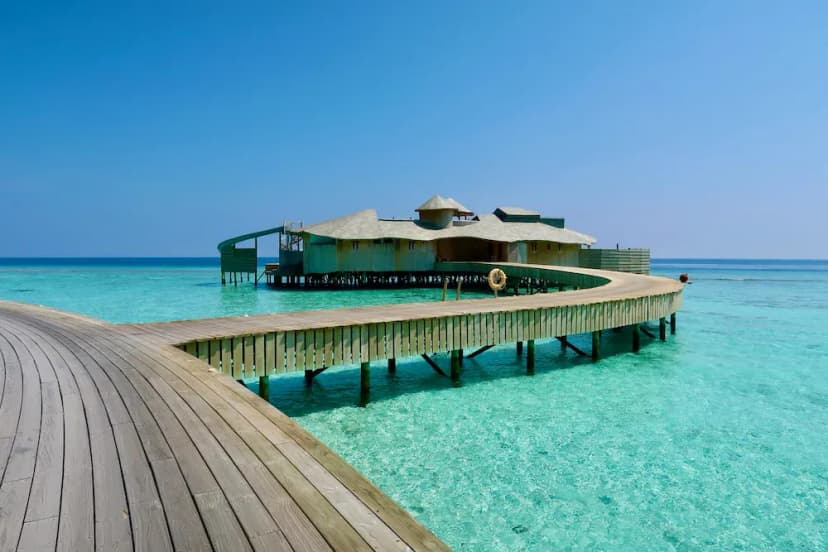
Our specialists have reviewed over forty Maldives resorts across seven years. They have slept in overwater villas at Velaa and woken to glass floors filled with rays. They have experienced private chefs at One&Only and spa treatments suspended above the lagoon at Four Seasons Landaa Giraavaru. They are not easily impressed by the Maldives anymore. Which makes what follows more significant, not less: Soneva Fushi is still the one. The Case Against Novelty Soneva Fushi opened in 1995. In Maldives terms, this makes it ancient. Dozens of resorts have opened since with larger pools, more dramatic architecture, more Michelin-starred consultants. Several of them are extraordinary. None of them have yet made the experience at Soneva Fushi feel dated. The reason is that Soneva did not build a resort. It established a philosophy — and then built the physical environment to serve it. No shoes. No news. No clocks. These are not quirks. They are commitments. And they create something that no amount of architectural brilliance can manufacture: genuine decompression. “The Maldives is not about the resort. It is about which version of yourself you want to be for seven days. Soneva Fushi answers that question better than anywhere else our specialists have stayed.” — Anna, Indian Ocean & Wellness Specialist What Soneva Fushi Actually Is Soneva Fushi sits on Kunfunadhoo island in the Baa Atoll — a UNESCO Biosphere Reserve that contains Hanifaru Bay, the world’s most spectacular manta ray feeding ground. The island itself is covered in dense tropical jungle, which the architects have worked around rather than cleared. Villas sit within the vegetation, not above it. There are 57 villas. This matters. At peak capacity, Soneva Fushi holds approximately 150 guests on an island large enough that guests will regularly walk for twenty minutes without encountering another person. The sense of space is not a design trick. It is genuine. The transfer from Malé is approximately 30 minutes by seaplane, operating between 6:30am and 4pm. If a flight lands after 4pm, an overnight stay in Malé is required — a detail our specialists plan around carefully. The Villas: Crusoe vs Water Retreat The decision most clients agonise over is whether to choose a beach villa (the Crusoe Residence) or an overwater villa (the Water Retreat). Our specialists have stayed in both, and the recommendation depends entirely on what you value. Choose the Crusoe Residence if you want the authentic Soneva experience as the founders intended it — direct beach access, the sense of having your own jungle hideaway, a larger footprint, and prices that are significantly lower. The pool is private. The garden is genuinely wild. You fall asleep to the sound of the ocean rather than over it. Choose the Water Retreat if the idea of waking up suspended above turquoise water is something you have imagined specifically. The glass floor panels are extraordinary. The water slide is absurd and magnificent. The sunsets from the deck are genuinely among the finest vantage points in the Maldives. Both categories start larger than you expect. The entry-level Crusoe Residence covers 280 square metres. The open-air bathroom alone is larger than many hotel rooms in London. If you book through HighStreet Holidays, your specialist can advise on which specific villa within each category gives you the best reef access or most privacy. The House Reef The house reef at Soneva Fushi is one of the three finest our specialists have encountered in the Maldives, alongside the reef at Gili Lankanfushi and the outer reefs accessible from Four Seasons Landaa. This is not a trivial claim. Most Maldives resorts have a house reef. Most house reefs are pleasant. Soneva’s is genuinely remarkable. The reef begins immediately at the beach edge and drops to 25 metres within a short swim. On a recent snorkel, our specialists recorded four hawksbill turtles, two white-tip reef sharks, a napoleon wrasse of extraordinary size, and a manta ray passing in the blue water below. None of this required a boat trip or a guide. For divers, the PADI centre is excellent, and Hanifaru Bay — the seasonal manta ray feeding aggregation accessible by a 20-minute boat ride — is as close to a religious experience as marine wildlife can offer. If your dates fall between May and October, this alone justifies the choice of Baa Atoll. Dining: Six Restaurants Done Right Soneva Fushi operates six distinct dining venues, which would be unremarkable at a resort of this calibre if they were merely adequate. They are not. Fresh in the Garden — the flagship, set within a working kitchen garden — serves breakfast and dinner of a quality that would hold its own in any European capital. So Ambitious, the overwater fine dining restaurant, is the one to book for a special evening. The glass floor is a feature that works — there is something genuinely arresting about eating above a living reef. The tasting menus change monthly and rotate guest chefs from around the world. The Den deserves its own paragraph. It is an open-air cinema showing films nightly, adjacent to a chocolate room and ice cream parlour that operates twenty-four hours a day with over forty flavours. It is the most talked-about single feature of any resort our specialists have visited, and it costs nothing beyond the room rate. The Observatory Soneva Fushi employs resident astronomers. Every evening, after dinner, they set up at the observatory and invite guests to spend as long as they wish looking at a sky that has not a single source of light pollution in any direction. On a recent visit, the experience reduced a client to near-silence for twenty minutes. The client later described it as the most moving experience of the past five years. There is a particular kind of luxury that is not about comfort or service or the quality of the champagne. It is about context — about being reminded of scale. Soneva Fushi has understood this longer than almost any other luxury operator on earth. Verdict & Who It’s For Soneva Fushi is not the right choice for every Maldives traveller. If you want ultra-contemporary architecture, Velaa Private Island has it in abundance. If you want a resort so small it feels like a private house, Gili Lankanfushi’s thirty-six villas come closer. If you want the finest dive operation in the archipelago, Four Seasons Landaa Giraavaru has an argument. But if you want to understand what the Maldives was always capable of being — before it became a genre, before the infinity pool was a cliché, before “barefoot luxury” became a marketing phrase — then Soneva Fushi is the place. It remains the original, and in most of the ways that matter, it remains the best. [Block Field]
From the Maldives Specialist
The Maldives is about which version of yourself you want to be for seven days.Travel specialist
From the Africa Specialist
A safari is the only holiday where you go to be genuinely surprised.James Okafor
From the Founder
Travel can be more personal, more considered, and more genuine.Monis · Founder
What Our Clients Say
Read verified, independent reviews from our customers who booked their bespoke luxury holidays with us.